

By Maya Gonzalez
National Growth in Team Sports Participation
Recent data shows a record 92.3 million Americans ages six and up participated in team sports in 2025—a 7.6% increase over the previous year. Seventeen of 24 team sports tracked grew year-over-year, with outdoor soccer leading the pack in popularity, followed by basketball expanding its reach.
These gains align with broader shifts—fans and players alike are seeking social connection, wellness, and community engagement in their sports. It’s no longer just about the big leagues; grassroots and lifestyle sports are rising fast. For example, many young people are drawn to shorter formats like 3×3 basketball or nontraditional options like flag football.
The Local Landscape: Salinas and the Salinas Union High School District
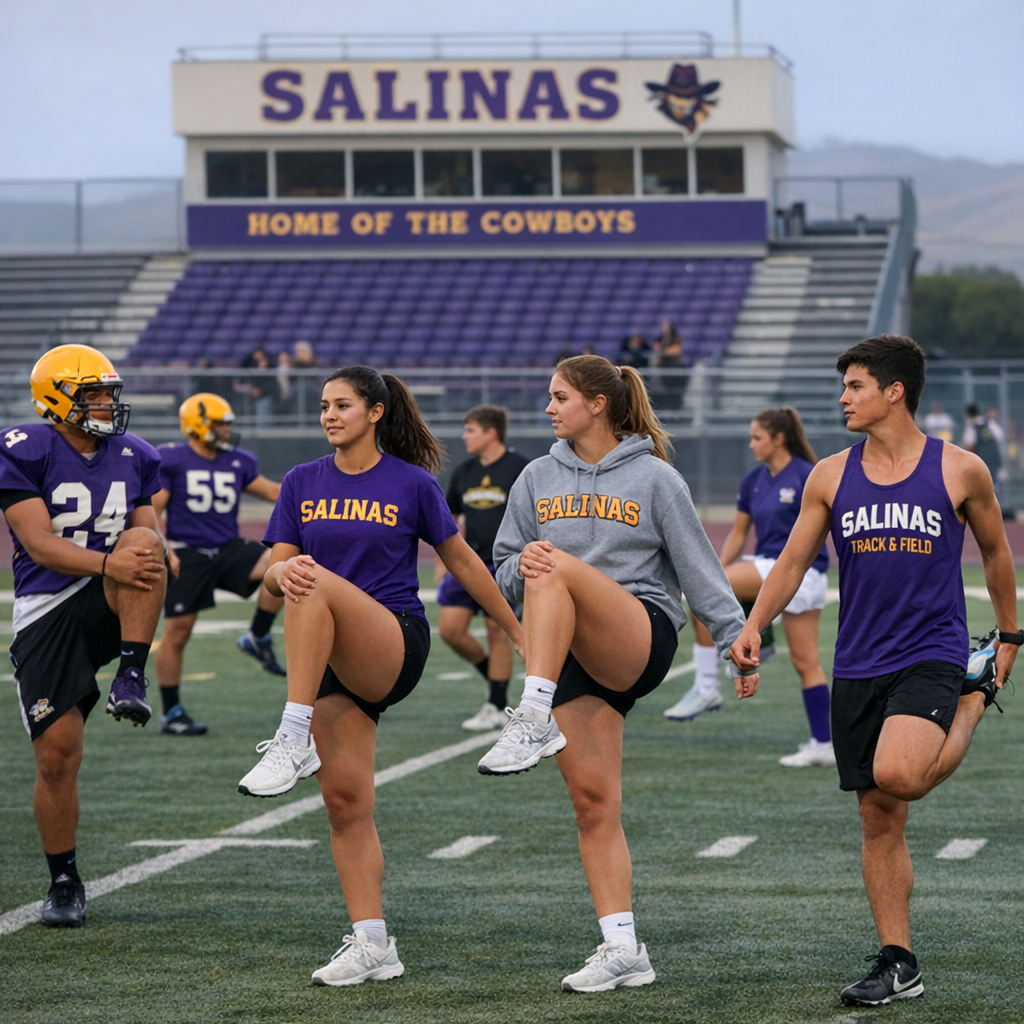
Here in Salinas, high school sports programs offer a wide array of opportunities. Salinas High fields interscholastic teams in sports ranging from traditional football, basketball, baseball, and soccer to growing offerings like flag football, swimming, mountain biking, and volleyball. But like many districts, Salinas faces challenges—budget constraints, facility upkeep, and ensuring equitable access for all students.
North Salinas High School also exemplifies expansion of sporting programs; their fall 2026 schedule includes girls’ flag football and water polo, showing how new sports are becoming part of the fabric of school athletics. Coaches are often stretched thin, and participation surpasses capacity in many cases.
Challenges and Opportunities for Coaches, Athletes, Families
One of the main hurdles locally is cost—uniforms, travel, and fees add up fast. Transportation to off-site games or practices can become another barrier. Schools with limited staff struggle to provide enough coaching for growing sports rosters.
Yet there’s strong opportunity here. As outdoor soccer and basketball grow nationally, Salinas schools can boost community engagement by hosting clinics, inviting local leagues to collaborate, and leveraging alumni or local businesses for sponsorships. Ensuring that newer sports—especially those attractive to diverse student populations—get visibility is key.
Steps to Strengthen Local Sports Programs
1. Expand Access and Inclusion
Make participation affordable through fee waivers, used equipment swaps, and fundraising. Prioritize new sports that lower traditional barriers—flag football, 3×3 basketball, and other non-contact options—for students who might otherwise feel excluded.
2. Support Coaches and Volunteers
Training and retaining coaches is essential. Larger programs like Salinas High that field dozens of teams need assistant coaches and support staff so no coach is overloaded. Local colleges or civic groups might partner to provide coaching education or mentorship.
3. Build Community Connections
Develop school-community sports hubs where students, families, and youth leagues can come together. It’s not just about spectatorship—it’s about building a sense of belonging. Small local venues, community tie-ins, and shared resources can make teams stronger and more sustainable.
A Look Forward
Salinas is in a great position: sports remain a source of pride and unity here. If national growth in participation—especially among youth—continues, there’s a major opportunity to lean in. Local leaders, schools, and families who focus on inclusion, coaching support, and community engagement can help Salinas’ teams not just survive, but thrive.